
The craft · Reno–Tahoe
Before the showing, let them feel at home
How thoughtful real estate photography helps buyers understand a room, its light, and the life that could happen there.
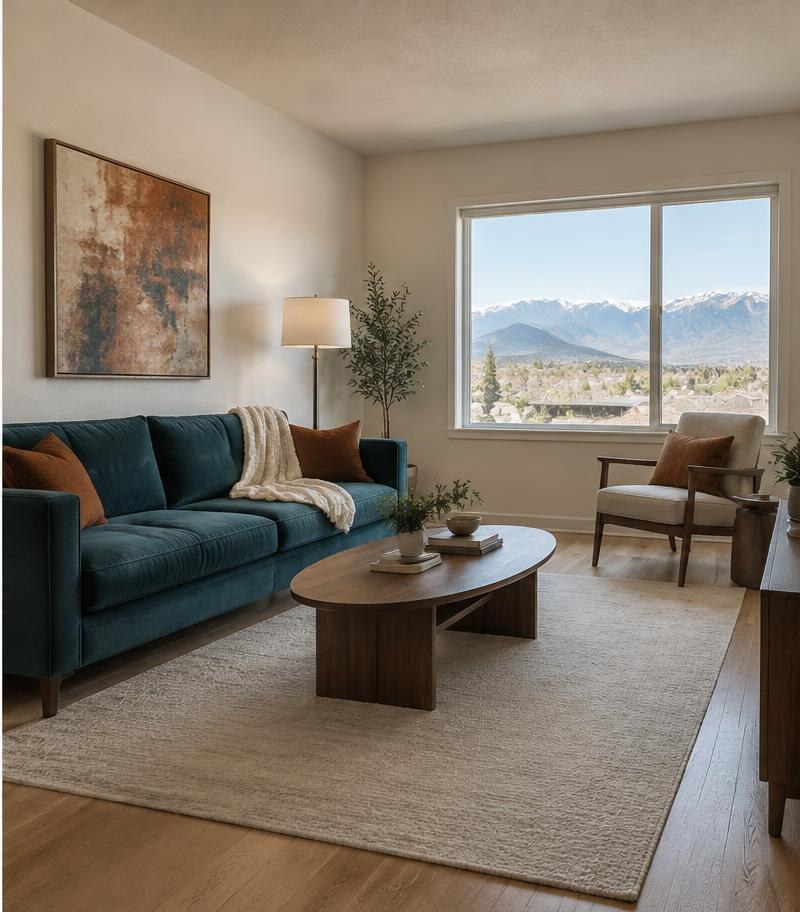
A listing photo has a practical job: show what is there. But the best ones do something quieter, too. They let someone imagine setting down their keys, taking in the light, and staying awhile. That feeling starts with an honest, readable view of the space.
Show the room, not the doorway
An awkward phone angle from the hall can leave half the room behind a doorframe. A view chosen from inside the space shows how the seating, windows, and circulation relate. It is not about making a room appear larger than it is; it is about giving a buyer enough information to understand it.
- Choose a camera position that reveals the main features and usable floor area.
- Keep vertical lines straight so walls and doorframes look natural.
- Leave room for a small human detail, but remove distractions that compete with the architecture.
What changes from room to room
Think of a bathroom photo that catches only a corner of the vanity and the top of the toilet: you still don't know whether there is a shower or how the fixtures fit together. In the kitchen, a view from the hallway can hide the island and working surfaces. In the bedroom, a doorway shot of the closet door says almost nothing about the bed, window, or usable floor area.
Moving into each space and choosing a level, open angle helps answer those practical questions. The four illustrated pairs on our home page show how framing changes what you can actually understand — they are generated demonstrations, not client before-and-after shoots.
Make light feel like the room really feels
When the window turns into a white rectangle, the view disappears. When the room is too dark, finishes and layout are hard to read. Careful exposure can hold both interior detail and exterior context without turning the scene into a fantasy.
One technique some architectural photographers use is flambient: blending an ambient-light exposure with a flash-lit exposure. It can help preserve natural atmosphere while keeping colors and room detail legible. The goal is not to promise a particular technique for every property, but to explain why controlled light matters.
The feeling follows the facts
Show the actual view. Keep the room's proportions believable. Photograph the spaces a buyer will ask about, not just the most photogenic corner. When a photo is both inviting and accurate, someone can picture their routines there before a showing ever begins.
A good listing photo makes it easy to understand the room — and easy to imagine being in it.
Have a property in mind? We photograph homes across Reno and the Tahoe region.
Request a shoot